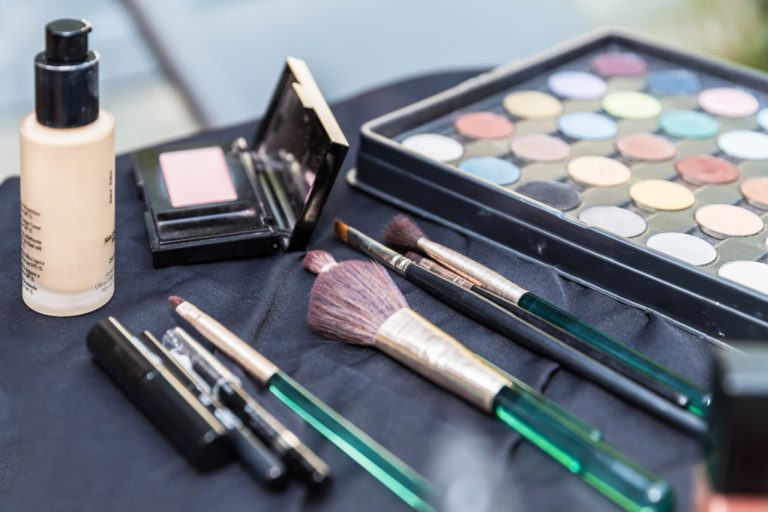
A perfect base is a key element of professional make-up. Foundation and concealer are used to achieve a uniform complexion and to provide an ideal surface for eyeshadow, blusher, contouring and finishers. Mastering the correct application of foundation and concealer guarantees a long-lasting finish, accentuates facial features and provides the perfect platform for all styles of make-up application, whether it be a natural everyday look or more dramatic make-up artistry.
A bad base job can also make even the most expertly applied eye or lip technique look lopsided, making it a skill that every new girl and professional makeup artist alike should know.
Knowing Your Skin
Dry Skin
Flaky, dull-looking skin is often dry. Exfoliate to avoid patchiness:
Prime your face. Before you apply your foundation, use a moisturizing face primer to keep your skin hydrated throughout the day.
Look for hydrating foundations that are either cream or liquid.
Steer clear of thick, powdery finishes, which will make the skin look drier.
Managing Oily Skin
If your skin is oily, it will shine and you will find that your makeup will slide:
Next, use a mattifying primer to help keep your shine at bay.
Go for oil-free or powdered foundation.
Take a light dusting of translucent powder to help knock off any excess shine but avoid looking cakey.
Or, you know, your skin could just be a little bit of everything. If your skin is super oily in some places and dry and flaky in others, you’ve probably got combination skin. Essentially, this means your skin can’t make up its mind, and you’ll need to find a happy medium when it comes to choosing products that won’t irritate it. Noted!
For combination skin, you need to balance out the different sections:
Now apply any sort of mattifying gel/cream in your oily areas (in my case, my T-zone).
Moisturize: Apply hydrating products to the drier parts of the face (the cheeks and jawline).
Blend until smooth.
The Ideal Foundation Colour How to Colour Match
Make sure to choose a foundation that matches your skin color. You can test the color on your jawline or the inside of your wrist. Avoid using a foundation that’s too light or too dark—it can make your face look unnatural and throw off the rest of your makeup.
Insurance Options
Sheer: Light, works best with a natural makeup application or everyday use.
Medium: Provides medium coverage and keeps the skin looking like skin.
Complete Coverage: Totally covers up all flaws for special occasions like photo shoots or weddings.
Formulas
Liquid: Multi-purpose, mixes well, good for all skin types.
Cream: More coverage, best for dry skin or for makeup artists.
POWDER: Great for a fast application and perfect for oily skin or for touching up during the day.
Stick: Great for detail work, defining features, or on-the-go use.
First things first, lets start with applying foundation. How do you prepare your skin?
Wash and moisturize the skin well.
Prime to even out texture, blur pores and make makeup last longer.
Application Tools
Brushes: Offer accurate application and enable feathering into tight spaces.
Sponges: Great for blending. Works particularly well with liquid products.
Fingers: The heat of your fingers breaks the product down for a natural finish.
Blending Methods
To apply, start in the center of the face and blend out for the most natural-looking results.
Flicking strokes with a sponge or stipple brush will leave no streak marks.
Layer product gradually for buildable coverage without caking.
Applying Concealer Choosing a Concealer
Shade: Use one shade lighter to brighten, or match for concealing.
If you prefer cream or liquid concealers, both are fine for all skin types (though the heavier ones are best for full coverage).
Finish: Matte concealers mask imperfections while luminizing versions illuminate the undereye area.
Concealer Application Zones
Dark circles: Lighten the area and cancel out the circles.
Blemishes & Redness: Conceal flaws for a natural-looking complexion.
Highlighting & Contouring: Concealer helps create the illusion of a defined face.
How to apply
use sparingly and feather outwards to get a smooth finish.
Apply with brush, sponge or fingers for varying degrees of coverage and detail.
If needed, set with a translucent powder to avoid creasing, particularly in the under eye area.
Stacking your bases How to layer foundation and concealer for a flawless finish
Start by applying foundation to give your complexion an even base.
Apply concealer over foundation to areas that require more coverage.
Make sure to blend edges carefully so you won’t have any lines where the product meets.
The Final Details
Dust the base lightly with powder for added staying power.
Set with setting spray to minimize the powderiness and to make your makeup last longer.
Mistakes to Avoid
Using too much product: Makes the foundation look cakey and unnatural.
Not Prepping The Skin: Causes texture and longevity issues.
Improper Color Match: Produces contrast resulting in an unnatural look of the makeup.
Missed Blending: Shows stripes, spots, or edges.
Makeup Artist Career Advice
Prime your skin, too: Begin with a moisturized complexion.
Adapt the basic application techniques to the client’s skin tone and type and to the type of event.
Use the least amount of products possible to achieve coverage that looks like your natural skin.
Make sure to blend well along the hairline, jawline, and sides of the nose.
Modify your product selection to fit the lighting situation (natural light, studio light, photography light).
Practicing with Base Makeup
Understanding and applying the principles of perfecting foundation and concealer is vital to maintaining a satisfied client base and good reputation. Foundation and concealer are the building blocks to a beautiful and long-lasting makeup application.
With some practice, knowledge of skin types, and the right products and brushes, you can get the smooth, even, luminous finish that every client wants from their makeup application.